How to Choose the 40 Buyer Questions That Matter for AI Search Tracking
Every AI visibility number rests on a list of questions. Presence rate, share of voice and citation share all describe how you perform on that list. If the list is wrong, the numbers are confidently wrong.
Most teams build their first list in an afternoon from whatever comes to mind. This post is a more careful method that still fits in a week.
What a good question set does
A good set has four properties:
- It reflects real buyers. The questions come from evidence of what buyers ask, not from what you would like them to ask.
- It covers the buying journey. It includes discovery, comparison and validation questions in sensible proportions.
- It is stable. It stays fixed long enough to show trends.
- It is small enough to read. You can review a sample of answers each week without a research team.
Figure 1 shows the process from raw questions to a governed set.
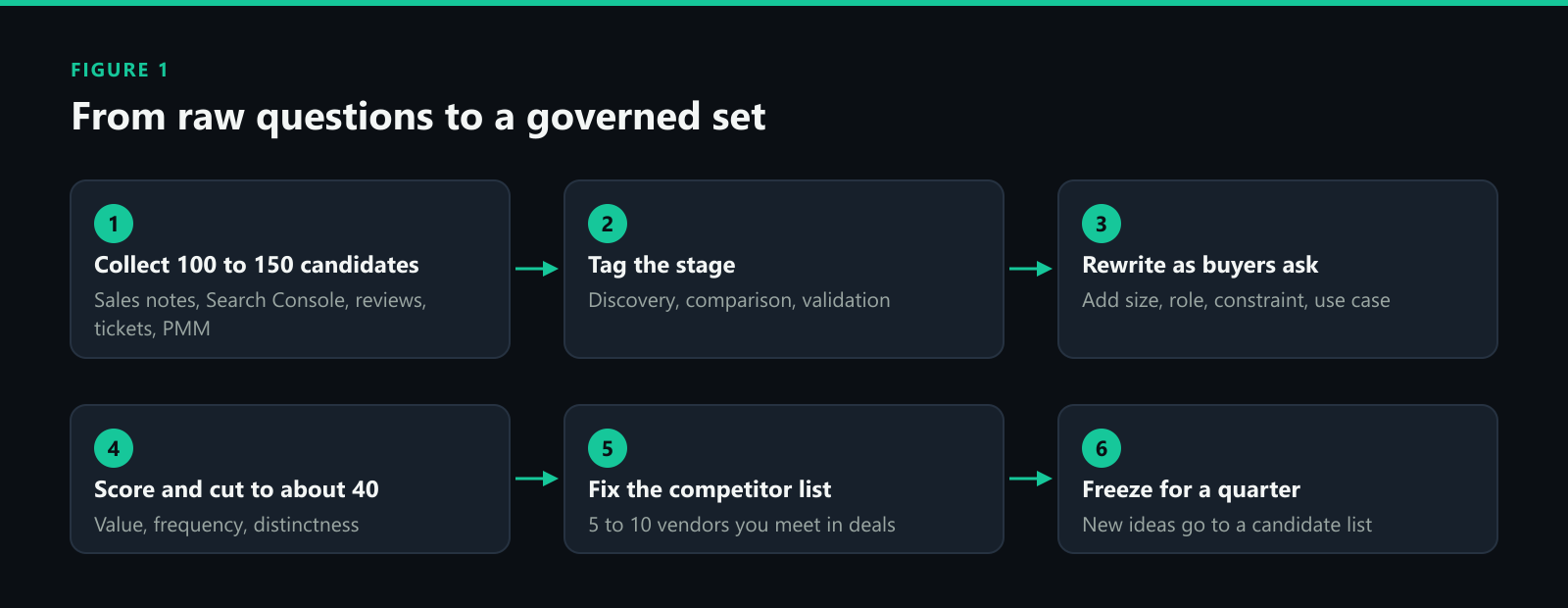
Figure 1. Six steps to build and govern the question set.
Thirty to fifty questions per product line usually meets all four. Forty is a good default.
Step 1: Collect candidates from evidence
Spend a few hours pulling raw questions from five sources:
- Sales calls and demo notes. The questions prospects ask in the first meeting are close to what they asked an assistant the week before.
- Search Console. Filter queries for question words (how, what, which, best, vs, alternative) and longer phrases.
- Review sites. Read comparisons buyers make in reviews of you and your competitors. Turn them into questions.
- Support and onboarding tickets. These give validation questions: "Does it support SSO?", "Can it export to Snowflake?"
- Product marketing. Ask which competitor matchups come up most in deals.
Aim for 100 to 150 raw candidates. You will cut most of them.
Step 2: Sort into three stages
Tag each candidate:
- Discovery: no brand named. "What are the best tools for X for a mid-size B2B company?"
- Comparison: one or more competitors named. "Vendor A vs Vendor B for X", "Alternatives to Vendor B".
- Validation: your brand named. "Does Vendor A integrate with Salesforce?", "How much does Vendor A cost?"
Figure 2 shows the suggested split.
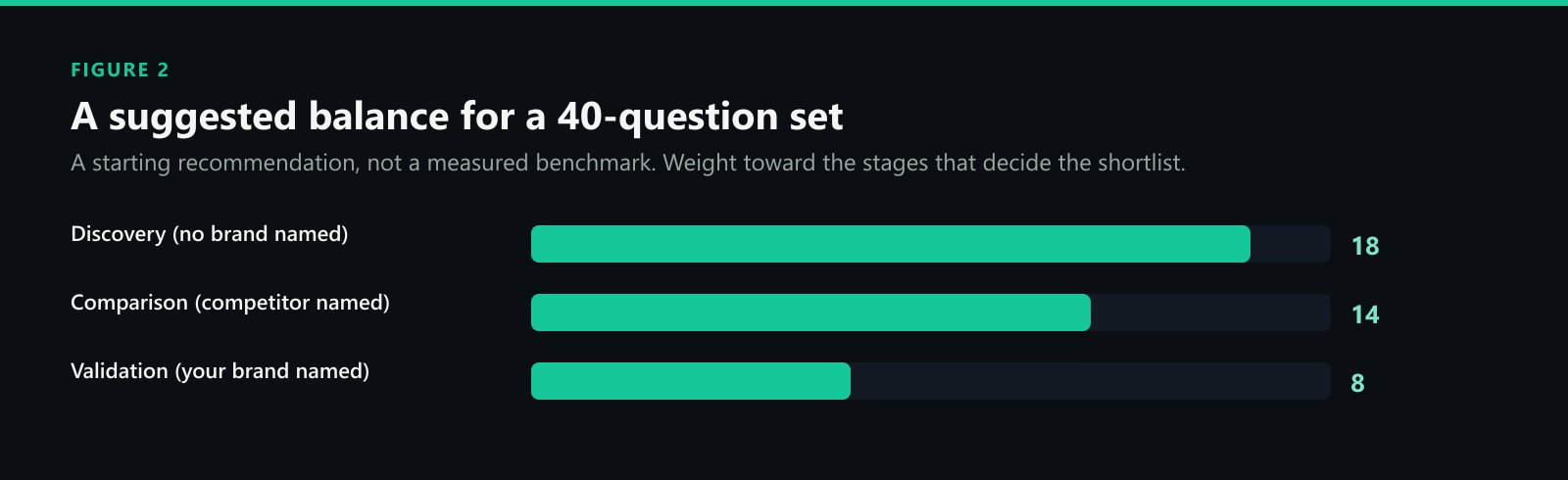
Figure 2. A suggested split of a 40-question set across buying stages. This is a recommendation, not data.
A balanced set of 40 might be 18 discovery, 14 comparison and 8 validation. Weight toward discovery and comparison, because those decide the shortlist. Validation questions are fewer but important for catching inaccuracies.
Step 3: Phrase questions the way buyers ask
People write longer, more specific prompts to assistants than to search engines. Include context the buyer would include:
- Company size: "for a 200-person SaaS company"
- Role: "as a RevOps lead"
- Constraint: "that works with HubSpot", "under a mid-market budget"
- Use case: "for forecasting renewals"
Keep a few short, generic versions too, because some buyers do ask that way. Avoid phrasing that leads the engine toward you, such as including your product's unique terminology in a discovery question.
Step 4: Cut to the questions that matter commercially
Score each candidate quickly:
- Commercial value: is a buyer asking this close to a decision?
- Frequency: how often does it come up in your evidence?
- Distinctness: is it meaningfully different from questions already selected?
Keep the top 40 or so. Merge near-duplicates; slight rewordings of the same question inflate the set without adding information.
Step 5: Fix the competitor list
Share of voice needs a fixed list of competitors. Pick the five to ten vendors you actually meet in deals, plus any that dominate AI answers in your category even if you rarely meet them. Write the list down with the question set and keep both stable.
Step 6: Run, read and refine once
Run the set across the engines your buyers use, more than once per question. Read the answers. You will find a few questions that produce off-topic answers or are so broad that no vendor list appears. Replace those once, before you treat the run as your baseline.
Step 7: Govern it like a keyword list
- Freeze the set for at least a quarter.
- Keep a candidate list for new questions from sales or market changes.
- Review quarterly: promote candidates, retire questions that no longer reflect buyers, and note every change in reporting.
- Record ownership: who approved the set and when.
Changing questions every month makes every trend line meaningless. Our post on reading AI visibility statistics explains why sample changes distort results.
A sample of what 40 questions can look like
For a hypothetical customer success platform:
- Discovery: "What are the best customer success platforms for mid-market SaaS?", "How do B2B SaaS companies reduce churn in the first 90 days?", "Which tools help CS teams predict renewal risk?"
- Comparison: "Vendor A vs Vendor B for onboarding automation", "Alternatives to Vendor B for a 20-person CS team"
- Validation: "Does Vendor A integrate with HubSpot?", "How is Vendor A priced?"
Multiply that pattern across your use cases and segments and you reach 40 quickly.
Next steps
Once the set exists, it becomes the backbone of reporting, content planning and sales briefs. Our guide for demand generation leaders shows how to turn it into pipeline reporting, and our content and SEO playbook shows how to run a weekly rhythm around it.
Genmark AI stores your question set and competitor list, runs them across up to eight AI engines on a schedule, and keeps the history so trends stay honest. Get a free AI Visibility Snapshot to see where you stand before you build your set.
Frequently asked questions
How many questions should we track?
Thirty to fifty per product line is a practical range. Fewer than that makes the metrics jumpy; many more makes reading the answers impractical.
Should questions be short keywords or full sentences?
Full sentences, phrased the way buyers type into assistants. Buyers ask longer, more specific questions in AI tools than in traditional search.
Should we include questions that name our brand?
Yes, but keep them to a minority of the set. Branded questions check accuracy. Discovery and comparison questions show whether you reach the shortlist.
How often should we change the question set?
Keep it stable for at least a quarter. Add new questions to a separate candidate list and promote them at a scheduled review, so trends stay comparable.
Where do the best questions come from?
Sales calls and demo notes, longer question-shaped queries in Search Console, review sites, support tickets and the competitor matchups product marketing sees in deals.
Should we track the same questions in every engine?
Yes. Running the same set across engines lets you compare them and see where a gap is engine-specific.
See How AI Describes Your Brand
Discover where you stand in ChatGPT, Gemini, and Perplexity — and how Genmark AI can help you get cited.
Check Your AI Presence